Wir stehen vor einer Konterrevolution, schrieb ich im Juni in diesem Blog. Oliver Jungen legt nun in der FAZ nach: Der Staat erobert das Internet zurück. Zentraler Satz:

Die Rückeroberung des Internets durch die Staaten läuft auf vollen Touren, eine veritable Reconquista inklusive strategischer Allianzen und Rechtsbeugung im großen Stil.

Die spannende Frage ist: Kommt der Staat damit durch? Entgegen landläufiger Meinung ist der moderne, demokratisch verfasste Rechtsstaat keinesfalls allmächtig. Er lebt vielmehr, um das berühmte Böckenförde-Diktum abzuwandeln, von Voraussetzungen, die er selbst nicht garantieren kann.

Dazu gehören Steuern, die wiederum ein funktionierendes Finanzsystem und eine stabile Wirtschaft voraussetzen. Beim Versuch, Finanzsystem und Wirtschaft zu garantieren, hat der Staat sich gerade nach allen Regeln der Kunst verhoben.

Mit dem Internet könnte es sich nun ähnlich verhalten. Es scheint zudem, dass der Staat stärker auf das Internet angewiesen ist als das Internet auf den Staat. Google braucht den Staat weniger als Burda oder Opel. Nur totalitäre Staaten können das Internet zensieren. Demokratien werden sich damit, solange sie Demokratien bleiben, immer schwertun.

If you are an early adopter in the social media space, chances are that you already know about Foursquare. And more than that - you are probably already busy checking in at various locations, aiming to become the mayor and earn a new badge or two. Don't know what I'm talking about? Don't panic, it's still very early in the game.

Foursquare could be described as a simplified Qype crossed with Twitter and some gaming aspects added, thus being potentially addictive. Only recently, Foursquare added 50 more cities, some of them in Europe, including Hamburg. If you sign up for Foursquare, you can easily find the usual suspects you already follow on Twitter or friended in Facebook.

And then the game begins. Check-in from your mobile phone at various venues, and you may also give a Twitter-like shout at your buddies. If you are the person who checked in more often than anyone else, Foursquare dubs you "The Mayor" of that place, as long as nobody checks in more often.

Foursquare may well become the next Twitter. Of course this depends on many variables, but the early adopter crowd already has their vote cast. Ok, maybe Gowalla will be surpass Foursquare in Europe, but that's another story.

Der Kontakter schickte die Meldung am Sonntag auf den Ticker: Burdas legendärer DLD soll im nächsten Jahr erstmals kostenpflichtig werden. Die Hälfte der 800 Teilnehmer wird mit 2.500 Euro zur Kasse gebeten. Sollte die Rechnung aufgehen, spülte das immerhin eine satte Million in die Verlagskasse. No more lousy pennies!

Sehr viel günstiger ist derzeit noch das Frühbucherticket für die next10 im kommenden Mai. Das Leitthema heißt Game Changers. In Kürze öffnen wir den Call for Participation und sammeln Ideen und Vorschläge für Visionäre, Strategien, Unternehmen und Produkte, die auf disruptive Technologien setzen, Regeln brechen und Geschäftsmodelle neu definieren.

Preislich in einer anderen Liga spielt die re:publica 2010 im April 2010 in Berlin. Das Motto heißt "nowhere", was für Echtzeitweb und Echtzeitkommunikation steht - und mich stark an die next08 ("get realtime") und die LeWeb'09 ("Real-Time Web") erinnert.

Für die LeWeb'09 haben wir übrigens einen Discount von 250 Euro in petto. Einfach hier klicken, registrieren und 250 Euro sparen.

Last week saw the introduction of a new operating system that will probably change the landscape over the course of the next few years. While it won't replace Windows on the desktop anytime soon, Microsoft still needs to be scared.

When Google's Chrome OS will appear on netbooks in a year from now, it first will abolish the so-called Microsoft tax on these devices. But while that's nothing Microsoft really has to fear, Chrome OS will also create an entirely new device category - something in between smartphones and netbooks.

That's not exactly the market Apple aims for with the long-awaited tablet (and Mike Arrington with his infamous CrunchPad). It's also different from Amazon's Kindle and Barnes & Noble's Nook. In fact Google is about to create a new market segment for small, lightweight and cheap devices like the current netbooks, but without the hassle of running a full-blown operating system.

Who cares that the iPhone doesn't run Mac OS X? Or that Android isn't a desktop operating system? I'm pretty sure there is a market segment above smartphones, but below small notebooks. Over the last few years, the mobile gadget space and the notebook space have moved in opposite directions, with smartphones growing in funtionality and notebooks getting smaller.

Chrome OS is just the logical operating system for the netbook category that might grow larger and larger with even cheaper devices (no Microsoft tax). Netbooks running Chrome OS are just perfect as the second or third computer for many people - and maybe even the first computer or the computer many people spend most of their computer usage time with.

That's basically the vision Oracle's Larry Ellison touted in the late nineties for his so-called Network Computer. I think the vision is still valid, even though it failed to materialise so far. But what's different now is the metaphorical layer. It's not "The Network is the Computer" but "The Browser is the Desktop". Google tries to crack the age-old desktop metaphor. And that is what Microsoft really has to fear.

There are other things as well to worry about for the PC OS incumbent. First of all, Chrome OS is free. This fact alone poses a threat to Microsoft which still makes a lot of money from selling Windows. And it's open source, thus solving the problem to get enough developers on the boat. Next, it moves almost everything to the cloud, where Microsoft despite its Azure efforts isn't a strong player as of today.

That's why Chrome OS is a Game Changer. I agree that there is quite a bit gambling at stake, but in the long run I think Google will be the clear winner. One of the next big issues you can expect Google to tackle is the connectivity problem. Of course there will be Chrome-powered netbooks packaged with mobile data plans. That's a common model with today's netbooks. But I think we can expect even more innovation in the mobile business from Google.

Before I can talk about Google Chrome OS (why it's a Game Changer and Microsoft should be scared), I have to pass on this cool slide deck about webdesign trends for 2010. Food for thought your eyes!

[via1, via2]

Sometimes hijacking a popular function on the world's most popular social network is simply the best approach to viral marketing. Forsman & Bodenfors did this for IKEA, and it looks like a real success. Just watch this short video (which is also a great way to package an agency case study).

[via1, via2]

Over the course of the last few weeks, AdAge has had an ongoing debate about the future (and present) role of agencies in general and the digital agency business in particular. The debate was kicked-off by Ana Andjelic and her piece titled Why Digital Agencies Aren't Ready to Lead, in which she stated:

Digital agencies impress clients with their passion, drive and technology know-how. Clients then say: "You gave us a lot to think about." Which often means that the account is awarded to someone else. Where digital shops fail is giving confidence to the client that all this momentum will be indeed executed in a well-led marketing campaign.

Jacques-Hervé Roubert countered this attack by simply stating the opposite: Why Digital Agencies Are Indeed Ready to Lead. He writes:

Like it or not, the days of the ingenious, 30-second TV spot are over. Today's creative ingenuity lies within the idea, the technology, the concept, the innovation and, perhaps most important, the Holy Grail: consumer connection. Word of mouth is more prevalent than ever and interactive communities have an increasingly louder and more influential voice and are stronger (and sometimes the only) sources of breaking news stories. No one understands this better -- nor is better equipped to handle the swift demands required -- than the digital agency.

Mitch Joel then even took the time to explain why both are right and wrong at the same time. Sounds weird? It isn't. Here's why:

The brands that are getting the best results are the ones who are bringing both traditional and digital marketing shops around the table and working in tandem to figure out a creative brief that is in-line with the overall business strategy, and then letting each agency go off and lead/create the right engagement for the right audience for the specific media channels that they are best at. Creative rarely "wins" when the digital agency is simply translating a TV spot into an online campaign, and traditional agencies will have an equally hard time trying to translate a vibrant online community into a Cannes-winning ad campaign.

On a sidenote, the debate branched off to the question whether big digital agencies (like Digitas, Tribal DDB and Agency.com) are still needed or could and maybe should be replaced by smaller shops (like Big Spaceship, Firstborn and EVB who superseded the former three at Wrigley). Tim Williams, the founder of Ignition, now takes the debate to a new level with his AdAge piece on 15 Risks You Can't Afford Not to Take. Out of his comprehensive list with many valid points, perhaps the most influential point would be the last:

15. Selling hours worked instead of value created. It's time for agencies to come to grips with what they're really selling. Clients don't buy your costs (your hours, overhead or FTEs), they buy the value you create for their brands. Yet agency accounting and compensation models are built around time and efficiency rather than outcomes and effectiveness. Especially given the increasing cost pressures from clients, it's time for agencies to start counting the right things and craft compensation approaches that align the economic incentives of the agency with those of the client.

As Peter Drucker once said, "You can't manage change; you can only be ahead of it." Agencies, no matter how smart or resourceful, won't be able to manage their way out of these disruptive changes in the marketplace. They can, however, devote their considerable creativity to staying one step ahead.

That's a challenge, indeed. The agency business seems to be ripe for a real Game Changer.

Was wir hier auf dem Fischmarkt seit Jahren zu sagen versuchen, bringt Paul Isakson in den folgenden 60 Folien auf den Punkt. Bis vor kurzem war er Head of Strategy bei space150.

Most marketers have never thought of digital as a wonderful place to build a brand. But that must change if their brands are to stay relevant in our digital era.

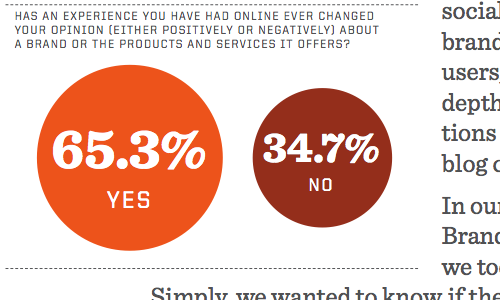
Eine neue Razorfish-Studie zeigt interessante Einsichten, wie Konsumenten im Netz mit Marken interagieren. Beispielhaft seien drei besonders plakative Zahlen herausgegriffen. Demnach lassen sich 65 Prozent der Befragten durch Onlineerlebnisse in ihrer Meinung über eine Marke beeinflussen.

Bild 15.png

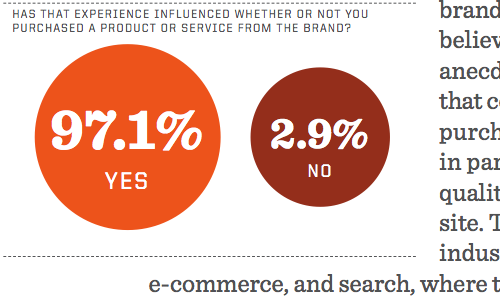
Noch krasser ist die zweite Zahl: 97 Prozent sagen, dass dadurch ihre Kaufentscheidungen (online wie offline) beeinflusst wurden.

Bild 16.png

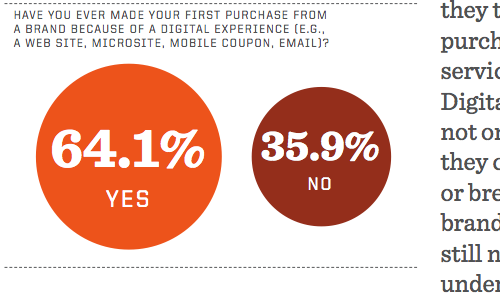
Und 64 Prozent wurden aufgrund eines digitalen Erlebnisses schon einmal zum Erstkäufer.

Bild 17.png

Für die Studie wurden 1.000 Konsumenten in den USA befragt. Die Befragung fand online statt, setzte also Internetzugang voraus. [via]

"Change is inexorable." (Jeff Jarvis)

Seit vier Jahren diskutieren wir auf der next conference die durch das Web ausgelösten fundamentalen Veränderungen. Das Internet ist die ultimative disruptive Technologie. 15 Jahre nach der Ankunft des Web im Massenmarkt haben wir nur einen ersten Eindruck davon, was möglich ist. Das Web ändert die Spielregeln von Grund auf. Es gibt dem Einzelnen größere Möglichkeiten, etwas zu bewegen, als jemals zuvor in der Geschichte. Wir nennen diese Menschen Game Changers. Sie setzen auf disruptive Technologien, brechen Regeln und definieren Geschäftsmodelle neu.

Game Changers sind innovativ und gehen Wagnisse ein, unbelastet vom althergebrachten Massenmarketing. Sie nutzen disruptive Technologien auf innovative Weise, um ihre Konsumenten zu bedienen, einen Bedarf zu befriedigen und die beste Lösung dafür zu finden. Sie brechen Regeln, die in Stein gemeißelt schienen, aber einfach nicht mehr länger gelten. Sie lassen sich durch etablierte Geschäftsmodelle nicht einschränken, sondern stellen sie in Frage und definieren sie neu: um das Erlebnis, den Nutzen und den Wert für die Konsumenten zu verbessern.

Game Changers ist das Leitmotto der fünften next conference, zu der SinnerSchrader im Mai 2010 einlädt. Auf der next10 werden Sie sie kennenlernen: Visionäre, Strategien, Unternehmen und Produkte, die mehr sind als innovativ - sie brechen Regeln. Da wir die Konferenz nicht ohne die next community veranstalten könnten, brauchen wir Ihren Input. Helfen Sie uns, die Agenda für eine außergewöhnliche Konferenz zu entwickeln! Wir konzentrieren uns im Moment auf den Einsatz web- und IP-basierter Technologie in folgenden Branchen:

  • Automotive
  • Banking
  • Retail, E-Commerce and FMCG
  • Mobile
  • Media, Entertainment and Advertising
  • Travel & Tourism
  • Health Care

Learn more about the conference theme. The Call for Participation will be open soon.

YouTube und sevenload, flickr, slideshare oder Scribd - überall hat sich in den letzten Jahren das Portalformat durchgesetzt. So ist ein Miki-Portal ein logischer Schritt für IntelliMedia und Marc Frey, die das innovative Medium Miki erfunden haben.

Seit ein paar Tagen präsentiert my-miki.com die Onlinemagazine in diversen Kategorien, es gibt selbstverständlich auch Tags, Bewertungs- und Kommentarfunktionen. Die Nutzer können sich jetzt registrieren und Profile anlegen, wie sich das gehört. Jedes Miki hat eine eigene Seite bekommen, auf der sich sämtliche Metakommunikation abspielt und auch der Code zu finden ist, mit dem Mikis in andere Websites eingebunden werden können.

Was ein Miki ist? Schwer zu sagen. Das erklärt vielleicht am besten IntelliMedia selbst und in einem Miki:

Beispielhaft hier das Miki der next09:

IntelliMedia war Medienpartner der next09 und Aussteller. Wir sprechen gerade über die Fortsetzung der Zusammenarbeit für die next10.

My sources say Murdoch never uses the internet. I think he simply doesn't understand how it - and his company - operate there.
Jeff Jarvis

Rupert Murdoch hat eine Mission. Er möchte die Medienkonsumenten, sagen wir es ruhig, zum Zahlen zwingen. Und dazu ist er auch bereit, Suchmaschinen wie vor allem Google vom Zugriff auszuschließen. Rupert Murdoch ist der Anti-Jarvis. Er tut all das, wovor Jeff Jarvis nicht müde wird zu warnen, zuletzt in seiner vielbeachteten Keynote auf den Münchner Medientagen.

Rupert Murdoch ist der heimliche Hoffnungsträger einer gebeutelten Printindustrie, die sich vor den düsteren Szenarien eines Jeff Jarvis fürchtet und deshalb lieber Murdoch zuhört. Hält Murdoch an seinen Plänen fest, Zweifel daran sind erlaubt, dann kommt es 2010 zum Showdown. Es wird sich sehr schnell zeigen, wer Recht behält. An dieser Frage hängt das Überleben einer ganzen Branche.

Axel Springer hat in der vergangenen Woche angekündigt, künftig iPhone-Nutzer von der Nachrichtengebung bei bild.de und welt.de auszuschließen. Sie sollen stattdessen eine iPhone-App installieren und für die Nachrichten von Bild und Welt zahlen. Das Muster ist das gleiche wie im Falle Murdoch: Statt auf attraktive Angebote und die vorhandene Zahlungsbereitschaft des Konsumenten setzt Springer auf Zwang und Ausschluss.

Das erinnert fatal an die Reaktion der Musikindustrie auf die digitale Herausforderung. Mit digitaler Rechteverwaltung (DRM) und der Kriminalisierung einer ganzen Generation versuchte sie, die Büchse der Pandora wieder zu schließen. Was bekanntlich nicht gelang. Es brauchte einen kreativen Zerstörer wie Apple, um der niedergehenden Branche ein modifiziertes Geschäftsmodell zu verpassen.

Wäre die langjährige Agonie der Musikindustrie vermeidbar gewesen? Das ist schwer zu sagen, da sich keiner der bekannten Majors für eine aktive, gestaltende Rolle im durch die Digitalisierung ausgelösten Wandel entschieden hat. Stattdessen haben sie sich auf Blockadeversuche und Destruktion verlegt. Mit bekanntem Ergebnis.

Steht der Printbranche nun eine ähnliche Agonie bevor? Wahrscheinlich. Denn selbst wenn die verzweifelten Versuche gelingen sollten, einen zweiten Erlösstrom neben den Werbeeinnahmen zu genieren (wofür nur wenig spricht), selbst in diesem Fall dürfte der Strom der Werbeeinnahmen dank sinkender Reichweiten weniger kräftig als bisher sprudeln. Und schon bislang war der Strom nicht kräftig genug, um die Kosten der aus einer anderen Epoche überkommenen Produktionsstruktur zu decken.

Die Printbranche wird schrumpfen, weil ihre Bedeutung im Medienmix der Konsumenten und infolgedessen auch der Werbungtreibenden stetig abnimmt. Das ist ein säkularer Prozess, der bei den Tageszeitungen zum Beispiel bereits in den frühen 80er Jahren begann. Zugleich steht sie aber auch durch die Digitalisierung immer stärker unter Druck. Denn die aus dem Geschäft mit gedruckten Medien gewohnten Oligopolrenditen lassen sich in digitalen Medien schlichtweg nicht erzielen.

Dafür sorgt schon der Wettbewerb. Nur ein Beispiel von vielen ist Craigslist, das aus dem Milliardengeschäft mit Kleinanzeigen in den USA ein Millionengeschäft gemacht hat. Allein durch Craigslist sind der Printindustrie allein in den USA Milliardenumsätze durch die Lappen gegangen.

Ähnliche Erosionsprozesse nagen an allen Ecken und Enden des gewohnten Umsatzniveaus der Branche. Der Umsatz sinkt stärker als die Reichweite und die relative Bedeutung im Medienmix. Das ist ein schmerzhafter Prozess, der die Verlagshäuser dazu zwingen wird, ihre Apparate drastisch zu verkleinern.

Die Printbranche hätte frühzeitig wissen können, was auf sie zukommt. Wer Nicholas Negroponte (Being Digital,1995), Kevin Kelly (New Rules for the New Economy, 1998) oder das Cluetrain Manifesto (1999) gelesen hatte, der wusste Bescheid. Das eigentliche Versäumnis der Herren in den Chefetagen: Sie hatten fast fünfzehn Jahre Zeit. Und sie haben die Zeit nicht genutzt.

In dieser Woche jährte sich nicht nur zum zehnten Mal der Börsengang von SinnerSchrader. Auf unserer Bilanzpressekonferenz haben wir auch die Zahlen für das abgelaufene Geschäftsjahr 2008/2009 präsentiert und den Jahresfinanzbericht vorgelegt.

sinner_schrader_1999.jpg

Das Echo war durchweg positiv. Das Hamburger Abendblatt illustrierte seinen Bericht mit einem zehn Jahre alten Foto (oben) der beiden Gründer und konstatierte:

In jeder Krise liegt eine Chance: Nach dieser Devise hat Matthias Schrader, Vorstandschef der SinnerSchrader AG, seine Internetagentur bislang erfolgreich durch die Rezession gebracht.

Die Analysten von SES Research bekräftigten in ihrem Bericht ihre Kaufempfehlung und das Kursziel von 2,80 Euro. Mein Lieblingssatz aus der Vorstandspräsentation findet sich auf Folie 39: Nach zehn Jahren geht es jetzt richtig los!

Im Web passiert in fünf Jahren ziemlich viel. Was Prognosen nicht gerade erleichtert. Es sei denn, man gehört zu denen, die ziemlich viel von dem selbst gestalten, was im Web passiert. Wie Eric Schmidt, CEO von Google. Auf dem Gartner Symposium/ITxpo gab er vor zwei Wochen einen Ausblick auf das Web in fünf Jahren (oder vielmehr in vier Jahren und 349 Tagen).

ReadWriteWeb hat die wichtigsten Punkte zusammengefasst:

  • Five years from now the internet will be dominated by Chinese-language content.
  • Today's teenagers are the model of how the web will work in five years - they jump from app to app to app seamlessly.
  • Five years is a factor of ten in Moore's Law, meaning that computers will be capable of far more by that time than they are today.
  • Within five years there will be broadband well above 100MB in performance - and distribution distinctions between TV, radio and the web will go away.
  • "We're starting to make significant money off of Youtube", content will move towards more video.
  • "Real time information is just as valuable as all the other information, we want it included in our search results."
  • There are many companies beyond Twitter and Facebook doing real time.
  • "We can index real-time info now - but how do we rank it?"
  • It's because of this fundamental shift towards user-generated information that people will listen more to other people than to traditional sources. Learning how to rank that "is the great challenge of the age." Schmidt believes Google can solve that problem.

Hier die wichtigsten sechs Minuten aus der 45-minütigen Session:

Reblog this post [with Zemanta]

jason_fried.jpg

Jason Fried, Gründer von 37signals, liest gern mal am Nachmittag

Für die Zeitschrift Inc. beschreibt Jason seinen typischen Arbeitstag. Und vermittelt eine Reihe von Einsichten in die Arbeitswelt einer Agentur und Softwarebude.

Über Büropräsenz und 40-Stunden-Woche:

I usually get to work between 10 a.m. and 11 a.m. Of the 16 people at the company, eight of us live here in Chicago. Employees come to the office if and when they feel like it, or else they work from home. I don't believe in the 40-hour workweek, so we cut all that BS about being somewhere for a certain number of hours. I have no idea how many hours my employees work -- I just know they get the work done.

Über Schreiben und Kommunizieren:

I spend most of my day writing. I write everything on our website. Communicating clearly is my top priority. Web writing is terrible, and corporate sites are the worst. You don't know what they do, who they are, or what they stand for. I spend a lot of time taking a sentence and reworking it until it's perfect. I love the editing process.

Warum Software immer einfacher werden sollte, aber mit der Zeit immer komplizierter wird:

In the software world, the first, second, and third versions of any product are really pretty good, because everyone can use them. Then companies start adding more and more stuff to keep their existing customers happy. But you end up dying with your customer base, because the software is too complicated for a newcomer.

Warum Sitzungen schädlich sind für den kreativen Arbeitsprozess:

We rarely have meetings. I hate them. They're a huge waste of time, and they're costly. It's not one hour; it's 10, because you pulled 10 people away from their real work. Plus, they chop your day into small bits, so you have only 20 minutes of free time here or 45 minutes there. Creative people need unstructured time to get in the zone. You can't do that in 20 minutes.

Über Unterbrechungen:

Very rarely is a question important enough to stop people from doing what they're doing. Everything can wait a couple of hours, unless it is a true emergency. We want to get rid of interruption as much as we possibly can, because that's the real enemy of productivity.

Über Launches:

Launches are the most hectic times, because so many things will go wrong. But the cool thing about Web-based software is you can update things in real time. If something is broken, we can fix it in three seconds, hopefully. But as we get bigger, small problems become bigger faster. Every move you make now is magnified, especially with launches. An announcement that might upset a few people today will upset a few hundred tomorrow. I spend a lot of time responding to that.

Über Planung:

We don't have big, long-term plans, because they're scary -- and they're usually wrong. Making massive decisions keeps people up at night -- I don't like to make those. The closer you can get to understanding what that next moment might be, the less worried you are. Most of the decisions we make are in the moment, on the fly, as we go.

[via] Foto: Chris Strong, Inc. Magazine

Reblog this post [with Zemanta]

Diese beiden Folien aus der jüngsten ACTA-Studie sollte sich jeder Marketing- und Medienentscheider einmal in Ruhe ansehen. Sie beschreiben zehn Jahre Revolution.

1999 suchten nur 9 Prozent der Bevölkerung im Internet nach näheren Informationen zu einem Thema, aber 67 Prozent achteten auf Berichte im Fernsehen, 58 Prozent lasen Berichte in Zeitungen und 44 Prozent in Zeitschriften. Heute ist das Internet mit 55 Prozent Medium Nr. 2 hinter dem Fernsehen (64 Prozent), aber vor Zeitungen (50 Prozent) und Zeitschriften (38 Prozent).

Allensbach2.png

Bei den 20- bis 29-Jährigen ist das Internet mit 81 Prozent bereits Medium Nr. 1, das Fernsehen (56 Prozent), Zeitungen (34 Prozent) und Zeitschriften (32 Prozent) haben den Anschluss verloren.

Allensbach3.png

[via]

Fischmarkt proudly presents bislang unveröffentlichtes Videomaterial aus dem Jahre 1999. Der Film entstand vor zehn Jahren auf der Roadshow zum Börsengang der SinnerSchrader Aktiengesellschaft. Der Termin der Erstnotiz an der Frankfurter Börse war der 2. November 1999. Der Film wurde seinerzeit noch analog gedreht und erst kürzlich digitalisiert.

Genug der Vorrede - Film ab!

Reblog this post [with Zemanta]

Free war noch nicht das Ende aller Möglichkeiten, mit disruptiven Geschäftsmodellen etablierte Märkte von Grund auf neu zu definieren. Innovative Unternehmen können Märkte auch umdrehen, indem sie Geld für etwas bezahlen, was vorher Geld kostete.

Wer schon Chris Anderson für einen Dummschwätzer und sein Buch Free für Unsinn hielt, für den ist das schwer einzusehen. Aber es lässt sich nicht mehr leugnen, und Google zeigt gerade, wie solch eine 180-Grad-Wende funktioniert.

Während TomTom und Nokia für viel Geld die beiden Duopolisten für Kartenmaterial erwarben, baut Google seine eigene Datenbasis auf und stattet Android-Telefone mit einem eigenen Navigationssystem aus. Es wird spannend zu beobachten, wie Blackberry und iPhone darauf reagieren.

Google indes wird auf dieser Basis ein ortsbezogenes Werbenetzwerk aufbauen - und mittelfristig die Gerätehersteller sogar dafür bezahlen, dass sie das Google-Navigationssystem einbauen, so wie Google heute bereits einen Teil der Werbeeinnahmen ausschüttet, die auf Android-Geräten generiert werden.

Es braucht nicht viel Phantasie, sich ein ähnliches Modell auch für das kommende Betriebssystem Google Chrome vorzustellen. Hardwarehersteller könnten mit jeder Google-Suche auf Netbooks Geld verdienen, der Preisvorteil eines kostenlosen Betriebssystems gegenüber dem teuren Windows würde sich weiter erhöhen.

Leseempfehlung: Google Redefines Disruption: The "Less Than Free" Business Model


Reblog this post [with Zemanta]

Digitaler Frischfisch

Der interaktive Konsument revolutioniert das Marketing. Ein Blog von SinnerSchrader.

TwitterCounter for @fischmarkt

Werbung

Fischmarkt on Facebook